
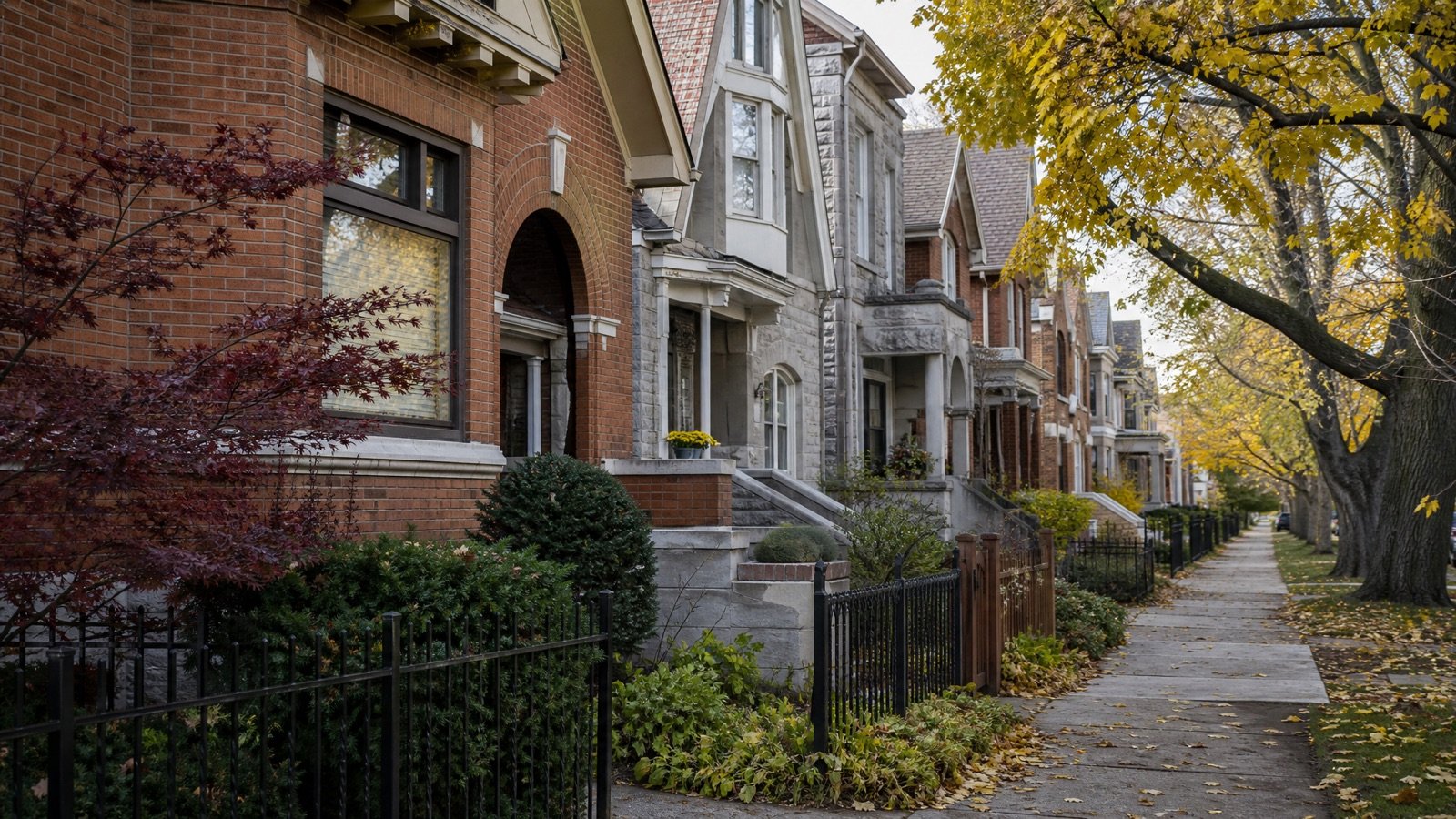
Short answer: it depends on the area, the type of house, and the month you look at, and we are not going to quote a number we cannot source. Chicago is not one market. A condo downtown, a bungalow on the southwest side, a two-flat on the west side, and a house in a south suburb can all move in different directions at the same time. The useful move is to check recent sold prices for your own block and your own kind of house, instead of relying on a headline about the whole city. Below is how to do that, and what the answer means if you need to sell quickly.
Why a citywide headline does not help you
News stories about home prices usually report one figure for a whole metro area. That number mixes high-priced neighborhoods with lower-priced ones, new condos with century-old brick, and houses in good shape with houses that need a roof. It tells you very little about the house you own.
Two houses a few miles apart can have opposite price trends. Even on the same block, a renovated house and an untouched one can sell for very different amounts. Condition is often the biggest factor, and no average captures it.
How to look up what is happening near you
- Check sold prices, not asking prices. Asking prices are wishes. Sold prices are what buyers actually paid.
- Stay close to home. Look at sales on your block and within a few blocks, in the last several months.
- Match the type. Compare bungalows with bungalows, two-flats with two-flats, condos with condos.
- Match the condition. A fully renovated house is not a comparison for one that needs work.
- Watch how long houses sat. If houses are sitting for months, buyers have leverage.
Good sources include county property records, public listing sites, local agents, and your local realtor association. For the suburbs, the same steps apply, and the county or village records are a good place to start. If you live in a place like Harvey, Evanston, or Waukegan, check sales in that community specifically.
What falling or rising prices mean for your sale
If prices near you are rising, you may be tempted to wait. If prices are falling, you may feel pressure to sell before they drop further. Both instincts can lead you astray. Nobody can reliably time a market, and the people who say they can are guessing.
A better question is what the house will cost you while you wait, and what you gain. Taxes, insurance, utilities, heat, and snow removal keep running. If the house needs a roof or has open violations, waiting does not fix those. In a rising market, a house that needs work still sells at a discount. In a falling market, the discount gets bigger.
Prices and houses that need work
A house in poor condition is a different product. Buyers who use mortgages often cannot buy it, because lenders want a house that meets certain standards. That leaves investors and cash buyers, who price the repairs in. Whether the overall market goes up two percent or down two percent changes the price of that house less than the cost of the roof or the boiler does.
This is why many owners of tired houses stop asking whether prices are dropping and start asking what the house would net after repairs, commissions, and carrying costs. That is the real comparison.
Comparing a listing with a cash offer
A listing may bring a higher price on a house in good shape, if you have time and money to prepare it. A cash offer is usually lower than a repaired retail sale, but it removes the costs and the uncertainty. To compare the two, put the numbers side by side:
- The likely sale price, minus agent commissions and closing costs.
- Minus the cost of repairs and cleaning before listing.
- Minus the carrying costs for each month the house is on the market.
- Compared with a cash offer, which has no commission and no repair bill.
If the cash offer is close to what you would net after all that, a direct sale may be the better choice. If a listing clearly nets more, list the house. We would rather you make the right choice than the quick one. You can see how we work on our how it works page.
Selling when you have tax or mortgage pressure
If you are behind on the mortgage or on property taxes, the price trend matters less than the clock. Balances grow, and so do your risks. Ask your lender for a payoff figure and the Cook County Treasurer for a tax balance, then see whether a sale clears them. If a foreclosure case is already open, talk to a housing counselor or an attorney as well. If your other property is in Wisconsin, Milwaukee Buys Houses makes cash offers there.
The bottom line
Are Chicago home prices dropping? The honest answer is that it depends on where you are and what you own, and a single figure will not tell you. Check sold prices near you, compare houses like yours, count your holding costs, and decide from there. If your house needs work and you need a clear answer, enter the address in the form on this page and see what a cash offer looks like. There is no obligation.
Frequently asked questions
Are Chicago home prices dropping right now?
It depends on the neighborhood, the type of house, and the month. Check recent sold prices near you instead of relying on a citywide headline.
Where can I find reliable sold prices?
County property records, public listing sites, local agents, and your local realtor association are good places to start.
Should I wait to sell if prices might go up?
Only if you can afford the holding costs and the house is in decent shape. Taxes, insurance, utilities, and upkeep keep running while you wait.
Does the market matter if my house needs repairs?
It matters, but condition usually matters more. A house that needs a lot of work sells at a discount in most markets.